
Montgomery County Resident Lookup Coverage
Each one-person records check answers a narrower question than a general name search. The Assessor connects an owner of record, a parcel, and separate mailing and situs addresses. The voter tool confirms an individual registration match, not everyone at an address. Court portals identify a case in a defined jurisdiction. Vital records document an event, but current certified copies are controlled by entitlement and identification rules. Begin with an address when the question is about property, with a case number when a case is known, and with a full name plus date information only where the official form asks for it.
| Record | What It Confirms | Where | Access |
|---|---|---|---|
| Property record card | Owner of record, parcel, mailing and situs fields | Montgomery County Assessor | Online or public terminal; assessment evidence, not title proof |
| Registration record | An individual registration match and election information | Tennessee Voter Lookup | County, first name, last name, birth month, and birth year are required |
| Circuit Court record | Case party, date, status, and docket events in scope | Montgomery Circuit Court portal | Free, with full view through court-provided login instructions |
| Vital record | A birth, death, marriage, divorce, or annulment event | Tennessee Vital Records | Certified copies require the applicable entitlement and ID route |
| Historical family source | A dated name, address, family, or probate connection | Montgomery County Archives | Archives, library, and digitized collections vary by record group |
A record can supply a lead without proving current residence. Preserve the source, the date, the name form, and the parcel, case, or book-and-page identifier. That simple ledger keeps a one-person records review from turning one old or unrelated result into a claim about a person today.
Montgomery County Court Lookup Limits
The Circuit Court online-records page is the local route for civil, criminal, and traffic cases. Its stated online span is civil cases from May 1, 2006 to the present and criminal and traffic records from November 1, 1999 to the present. The portal is free, but a full view uses the court's login instructions. A no-result at either cutoff is a reason to ask the clerk about an older or offline file, not proof that a case never existed.
The state Public Case History portal has a different role. It covers appellate history filed after September 1, 2006 and offers case number, case style, first and last party name, and organization searches. Later appellate motions, orders, judgments, and opinions may be linked under its own date rules. Circuit, Chancery, municipal, and appellate records are separate paths. Use the jurisdiction and filing year to sort similar names before drawing a conclusion.
The Montgomery Circuit Court search is shown below. Its live interface is login-backed, so the image is a portal reference rather than a substitute for a case result.
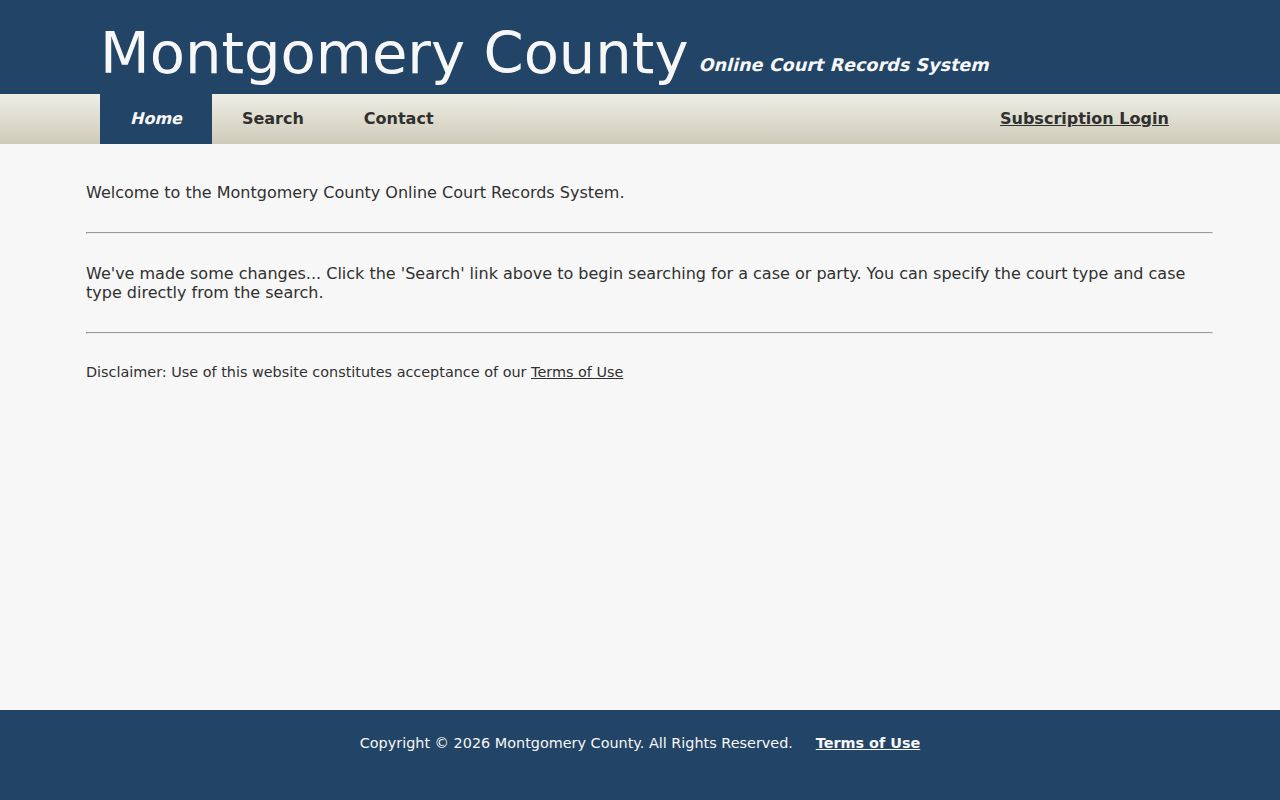
A Montgomery County court result should be read as a case record, not as a resident roll. Match its caption, case number, party role, filing date, and status against another source before linking it to a person.
| Result detail | Why it matters |
|---|---|
| Case number and style | Identifies the file and the names used in that proceeding. |
| Party and role | Separates a plaintiff, defendant, appellant, or other participant. |
| Case type and filing date | Tests whether the record fits the court and time period being checked. |
| Docket events and status | Shows procedural activity when the maintained record exposes it. |
| Disposition or linked order | May explain the outcome, but sealed or protected material is not assumed open. |
Note: The 1878 and 1900 courthouse fires destroyed Circuit Court records, so an older missing file can reflect loss rather than a failed search.
Montgomery County Voter Lookup Fields
For an individual registration check, the state form requires Montgomery County, first name, last name, birth month, and birth year. Use the spelling and address details that match the registration card where possible. A no-match can result from a spelling difference, the wrong county, an inactive-status issue, or a timing problem. The Election Commission is the correct fallback for a surprising result, rather than treating a portal response as a complete history of where someone lived.
| Field | Form type | Requirement | Use |
|---|---|---|---|
| County | Dropdown | Required | Select Montgomery County before submitting. |
| First name | Text | Required | Use the registration name or a lawful variant. |
| Last name | Text | Required | Check former or alternate spellings one at a time. |
| Birth month | Dropdown | Required | Choose the month supplied by the person or record in hand. |
| Birth year | Dropdown | Required | Use only to distinguish the selected individual. |
The public lookup cannot create a block roster or disclose protected identifiers. A voter-list request is separately regulated under T.C.A. § 2-2-138 and requires political-purpose certification. For the one-person task, the individual form is the narrower and more appropriate record.
Montgomery County Vital Record Access
Birth, death, marriage, divorce, and annulment records use a different access system from a general name search. Tennessee protects them under T.C.A. §§ 68-3-205 and 68-3-206. Recent certified copies go through the state office or an eligible local health-department route and need the required relationship or legal-interest documentation plus acceptable identification. A current record is not an open name index for casual searching.
The statutory age rule is useful for older family research. Birth records in the State Registrar's custody become public after 100 years. Death, marriage, divorce, and annulment records become public after 50 years, subject to safekeeping rules. Marriage applications and authenticating documents are public, but medical and confidential personal sections remain closed. The state charges $15 for a first copy and each additional copy, including a no-record search.
The Tennessee Vital Records applications page identifies the current form family. It is the safer starting point than guessing which form fits an event.
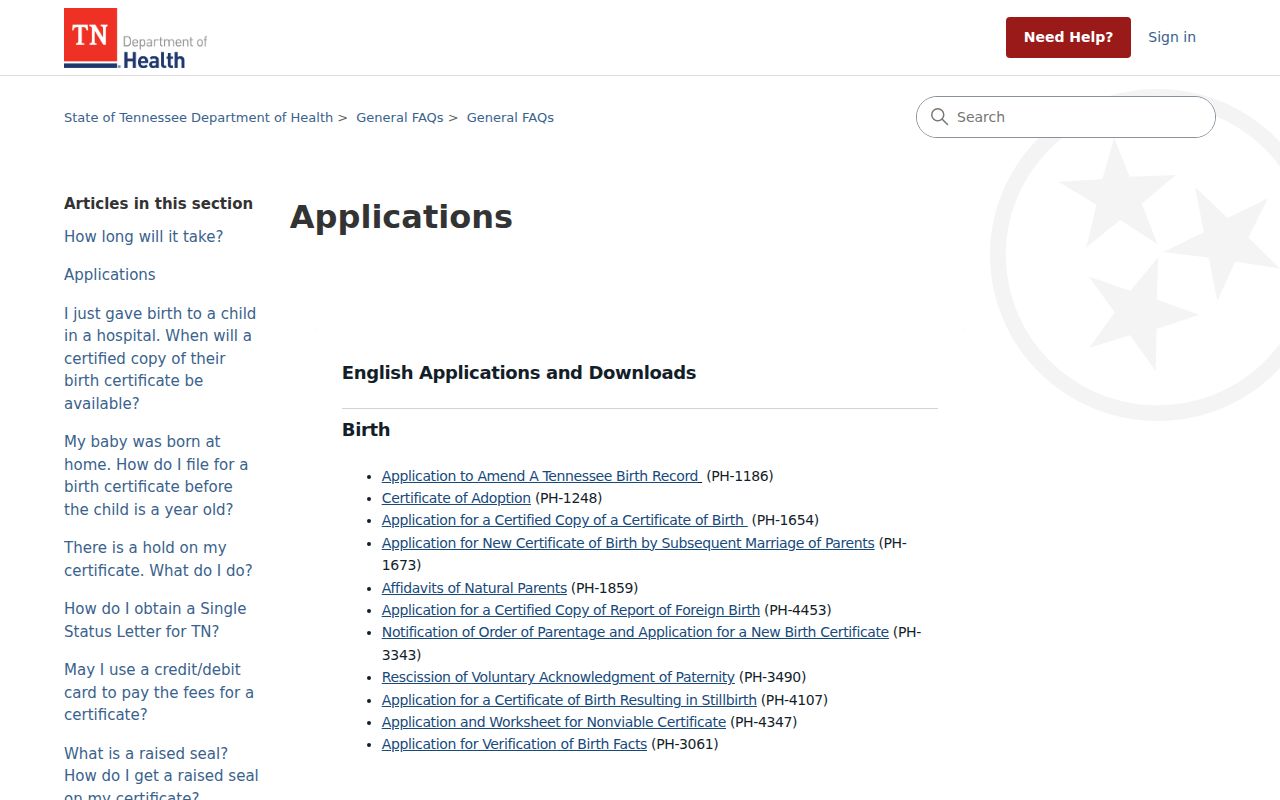
Older marriage research may move to the county clerk and the State Library and Archives route described on the marriage application. Keep an index clue, verified-information letter, and certified copy distinct because they serve different purposes.
Montgomery County Safety Record Checks
The Sheriff's jail menu has current inmates, recent arrests, and warrant choices, but the county warns that its law-enforcement database area has technical issues. Booking, release, transfer, bond, and court events can change a roster during the day. Use the current result and its date together, then contact the Sheriff if a status matters. For an incident or older record, the Sheriff's public-records route asks for a specific record, date range, or incident number and may withhold active or confidential material.
The Montgomery County jail menu is the live entry point for those time-sensitive categories.
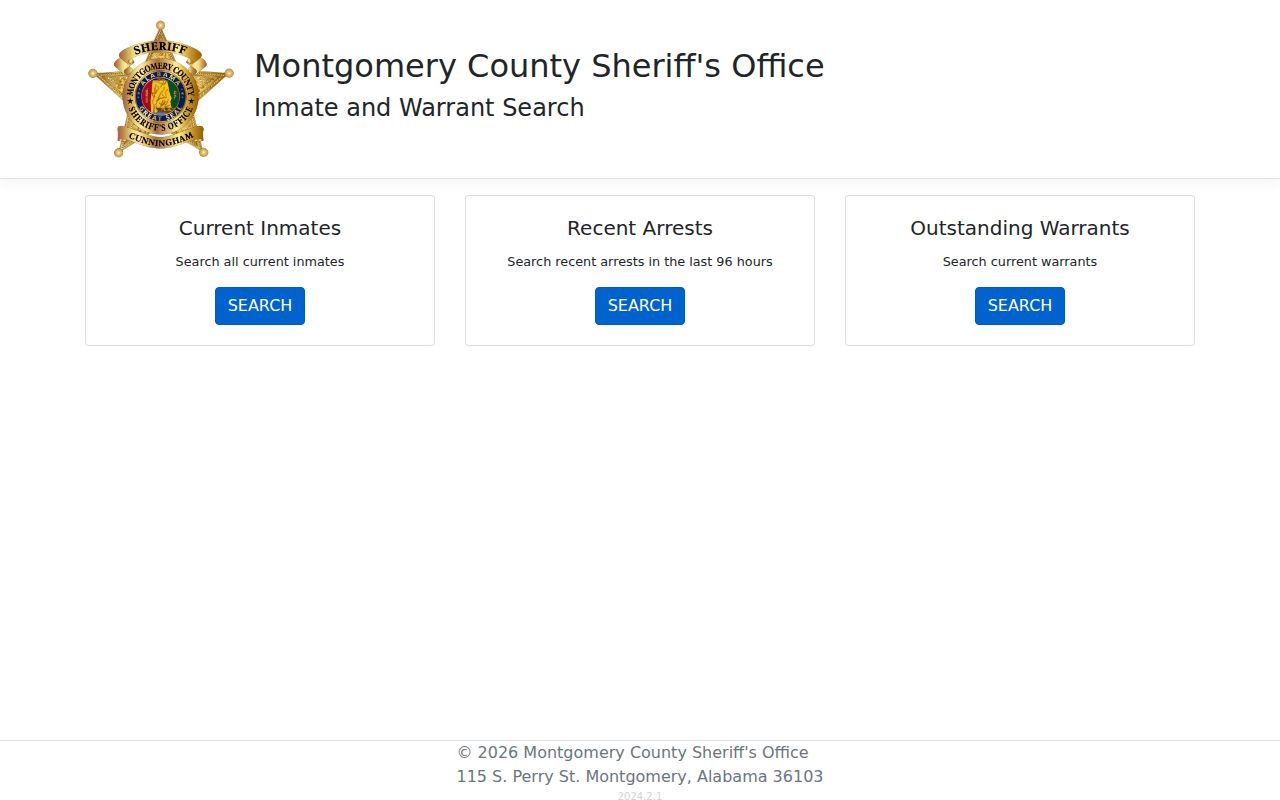
A roster hit should be matched with a booking or case identifier, not a name alone. Custody-change notifications belong with Tennessee Victim Services and VINE rather than a saved roster image.
The TBI Sex Offender Registry is a distinct state safety registry, updated daily. It has its own search and warning language. Do not reproduce sensitive registry details in a directory reference, and do not treat the registry as comprehensive or as a substitute for the Sheriff's or court record.
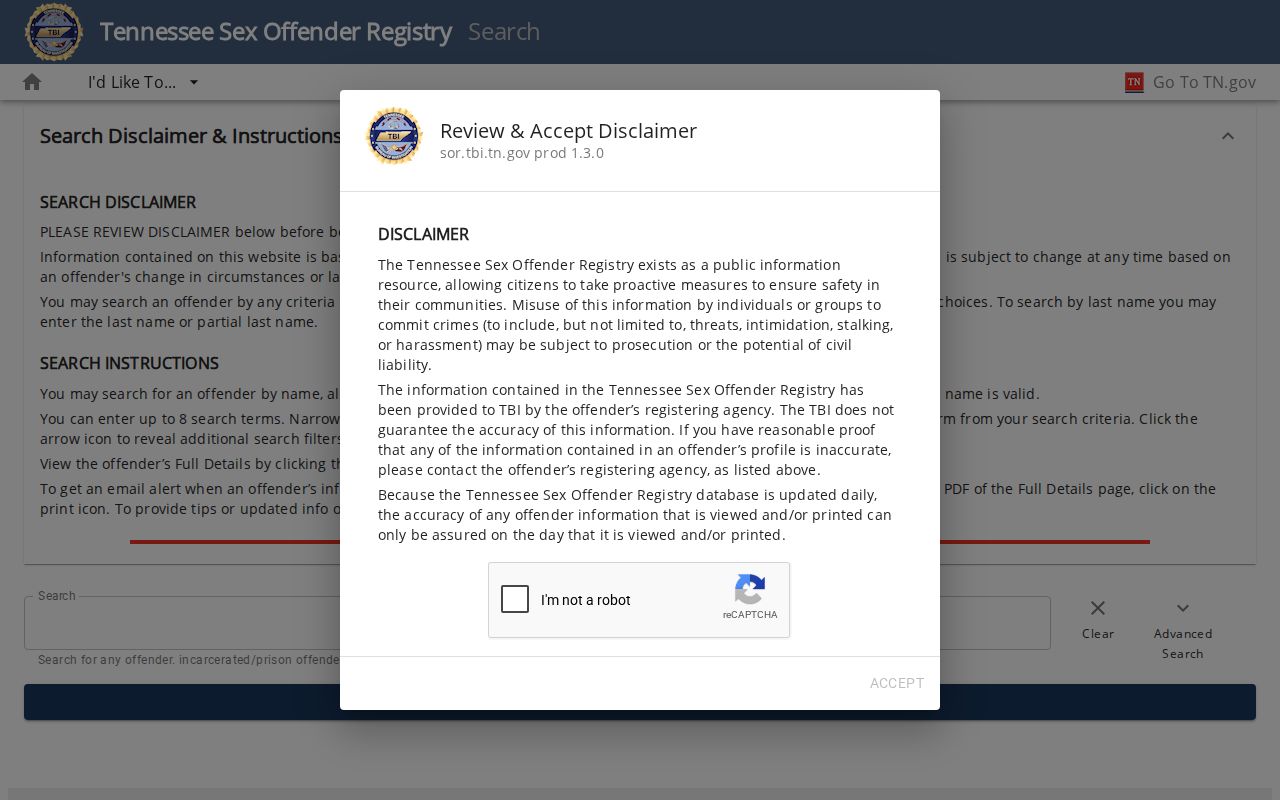
The registry's warning against stalking, threats, harassment, or intimidation applies to any use of its public information. Use the official portal for a current safety question and leave unneeded sensitive details uncollected.
Verify a Montgomery County Resident
A careful verification moves from a narrow clue to a second, independent record. An assessor card may anchor a property connection, but the owner mailing address can differ from the situs address and does not prove occupancy. A court party search can confirm a legal event, but it does not establish a long-term county connection. The goal is to identify what each record actually establishes, then stop short of claims the record cannot support.
- Write down the full name, known name variant, and the date range that belongs to the question.
- If an address is known, open the Assessor card and record the parcel ID, situs address, owner-of-record name, and transfer date separately.
- Check the appropriate individual voter or court route, using the minimum identifier required to separate similar names.
- Compare dates, name forms, and the jurisdiction. If the match is still uncertain, use a dated library, Archives, probate, or vital-record channel rather than forcing a match.
- Request a certified copy only from the custodian when an official certified document is actually needed.
- Docket
- A court's chronological list of filings, hearings, and events in one case.
- Index and image
- An index points to a record. An image is the scanned document itself and may have separate access rules.
- Certified copy
- A custodian-issued copy authenticated for an official use; it is different from an online viewing result.
For an older address trail, the dated material in the Montgomery County city directory collections can supply a historical lead. Verify that lead against a county or state record before treating it as current.
Montgomery County Request Routes
When no online path exposes the needed record, identify the custodian before making a request. The Tennessee Public Records Act, T.C.A. § 10-7-501 et seq., gives Tennessee citizens the baseline inspection and copy right for open government records. A request should describe an existing record with enough detail to locate it. The usual copy guidance is 15 cents for a black-and-white page and 50 cents for a color page, with labor after the first hour and actual costs for unusual media or vendor work.
Under the Act, a custodian that cannot respond promptly should provide, deny with a legal reason, acknowledge with a time estimate, or explain why the request lacks detail within seven business days. The Sheriff accepts oral inspection requests and written, email, online, or Form A copy requests, while other offices have their own channels. For court documents, ask for the case number, caption, document type, and whether a plain or certified copy is needed. For an Archives item, register and plan for closed-stack handling instead of assuming a current portal contains it.
Note: A precise request for a known case, parcel, or dated instrument is more useful than a request for every record connected to a name.
Montgomery County Privacy Limits
Public access has limits. Protected voter identifiers, sealed court material, juvenile and active law-enforcement records, restricted vital records, and DD214 military discharge records do not become open because a related record can be viewed. The Tennessee Safe at Home program provides an eligible participant a substitute mailing address and confidential absentee voting arrangement. It does not erase existing records or replace the actual address in a real-property assessment, tax, or recording system.
Commercial people-finder services are not a reliable substitute for a county or state custodian. Their data can be stale or misidentified. Ask the office that holds a record about a correction, a lawful redaction, or a confidentiality rule instead of trying to assemble a broad profile from unrelated results.
Lawful use. Use Montgomery County records for personal, lawful research such as family, estate, civic, or safety questions. Do not use record results to stalk, harass, threaten, or intimidate anyone.